
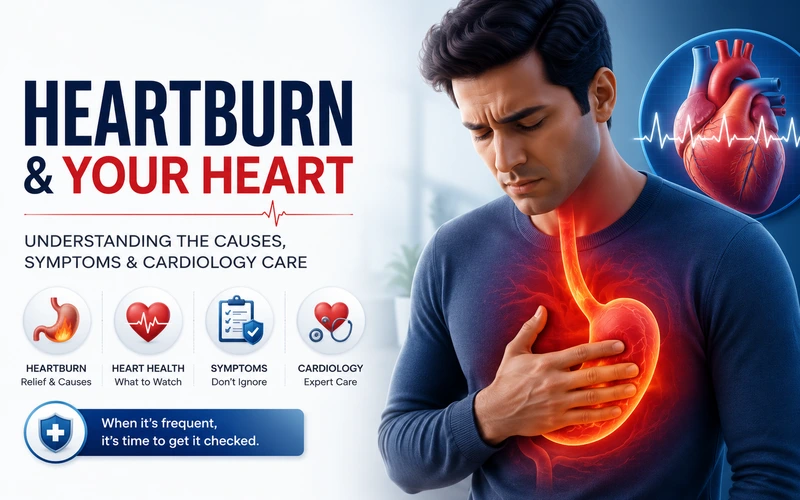
Nearly 20% of adults experience gastroesophageal reflux disease (GERD), and heartburn is its most common symptom. Although heartburn is usually related to acid reflux, its burning chest discomfort can sometimes resemble symptoms of a heart attack, making timely medical evaluation essential.
Heartburn is a burning sensation behind the breastbone that occurs when stomach acid flows back into the esophagus. While occasional episodes may develop after eating spicy or fatty foods, frequent heartburn can indicate an underlying digestive condition such as GERD. Understanding the heartburn meaning commonly referred to as “सीने में जलन” (heartburn meaning in Hindi) helps people recognize symptoms early and seek appropriate care.
If you experience persistent heartburn, unexplained chest discomfort, or symptoms that resemble a heart attack, seeking prompt assessment at a trusted Cardiology Hospital in Delhi can help identify the underlying cause and ensure timely treatment.
Heartburn Causes and Risk Factors
Heartburn develops when the lower esophageal sphincter (LES), a ring of muscle between the esophagus and stomach, becomes weak or relaxes inappropriately, allowing stomach acid to flow back into the esophagus. Repeated acid exposure irritates the esophageal lining, leading to the characteristic burning sensation.
Several factors can increase the likelihood of developing heartburn. Understanding these heartburn causes and heartburn reasons can help reduce symptoms and prevent frequent episodes.
Common Heartburn Causes
- Large or heavy meals: Overeating increases pressure inside the stomach, making acid reflux more likely.
- Spicy, fatty, or fried foods: These foods can relax the lower esophageal sphincter and delay stomach emptying.
- Citrus fruits, tomatoes, chocolate, caffeine, and carbonated beverages: These are common dietary triggers in many individuals.
- Smoking and alcohol consumption: Both weaken the lower esophageal sphincter and increase acid reflux.
- Obesity or excess body weight: Increased abdominal pressure pushes stomach contents upward into the esophagus.
- Lying down immediately after eating: Reclining too soon after meals makes it easier for stomach acid to flow backward.
- Certain medications: Some pain relievers, calcium channel blockers, sedatives, and other medicines can contribute to heartburn.
Risk Factors
Certain medical conditions and life stages can further increase the risk of frequent heartburn, including:
- Gastroesophageal reflux disease (GERD)
- Hiatal hernia
- Pregnancy, due to hormonal changes and increased pressure from the growing uterus
- Chronic stress, which may worsen digestive symptoms in some individuals
- Delayed stomach emptying (gastroparesis)
- Advancing age, which may reduce the strength of the lower esophageal sphincter
Heartburn Symptoms
Heartburn symptoms can range from occasional mild discomfort to persistent burning pain that interferes with daily activities. While many episodes are harmless and resolve with lifestyle changes or medication, recurring symptoms may indicate gastroesophageal reflux disease (GERD) or another underlying condition that requires medical attention.
The most common heartburn symptoms include:
- A burning sensation in the chest, usually behind the breastbone
- Pain or discomfort that worsens after eating, bending over, or lying down
- A sour, acidic, or bitter taste in the mouth due to acid regurgitation
- Food or stomach acid coming back into the throat or mouth
- Difficulty swallowing or the feeling of a lump in the throat
- Frequent burping or bloating
- Persistent sore throat, hoarseness, or a chronic cough caused by repeated acid reflux
When Are Symptoms a Cause for Concern?
Occasional heartburn after a heavy meal is usually not serious. However, you should seek medical evaluation from a trusted cardiologist in Delhi if you experience:
- Heartburn more than twice a week
- Symptoms that persist despite using over-the-counter medications
- Difficulty or pain while swallowing
- Unexplained weight loss
- Vomiting blood or passing black, tarry stools
- Frequent nighttime heartburn that disrupts sleep
Heartburn vs. Heart Attack: How to Tell the Difference
Chest pain should never be ignored because both heartburn and a heart attack can cause discomfort in the center of the chest. Although heartburn is usually caused by acid reflux, it is not always easy to distinguish it from a cardiac emergency based on symptoms alone. If you are uncertain about the cause of your chest pain, seek immediate medical attention.
Symptoms More Suggestive of Heartburn
Heartburn typically occurs when stomach acid irritates the lining of the esophagus. It is more likely to be heartburn if you experience:
- A burning sensation behind the breastbone
- Symptoms that begin after eating a large, spicy, or fatty meal
- Pain that worsens when lying down or bending over
- A sour or bitter taste in the mouth due to acid reflux
- Relief after taking antacids or acid-reducing medication
Symptoms That May Indicate a Heart Attack
A heart attack requires immediate emergency treatment. Seek urgent medical care if chest discomfort is accompanied by:
- Pressure, tightness, squeezing, or heaviness in the chest
- Pain spreading to the left or both arms, shoulders, neck, jaw, or back
- Shortness of breath
- Cold sweating
- Nausea or vomiting
- Dizziness, fainting, or unexplained weakness
Women, older adults, and people with diabetes may experience less typical symptoms, including unusual fatigue, nausea, upper back pain, jaw pain, or breathlessness without severe chest pain.
Heartburn in Pregnancy
Up to 80% of pregnant women experience heartburn during pregnancy due to hormonal changes and increased pressure from the growing uterus. As pregnancy progresses, the hormone progesterone relaxes the lower esophageal sphincter (LES), allowing stomach acid to flow back into the esophagus more easily.
Managing Heartburn During Pregnancy
Most cases can be managed safely with simple lifestyle measures, such as:
- Eating smaller, more frequent meals instead of large meals
- Avoiding spicy, fatty, fried, and acidic foods that trigger reflux
- Waiting at least 2–3 hours after eating before lying down
- Sleeping with the head slightly elevated
- Drinking adequate water throughout the day
- Wearing loose-fitting clothing to reduce pressure on the abdomen
Heartburn Treatment at Home
The following measures can help reduce acid reflux and relieve mild heartburn symptoms:
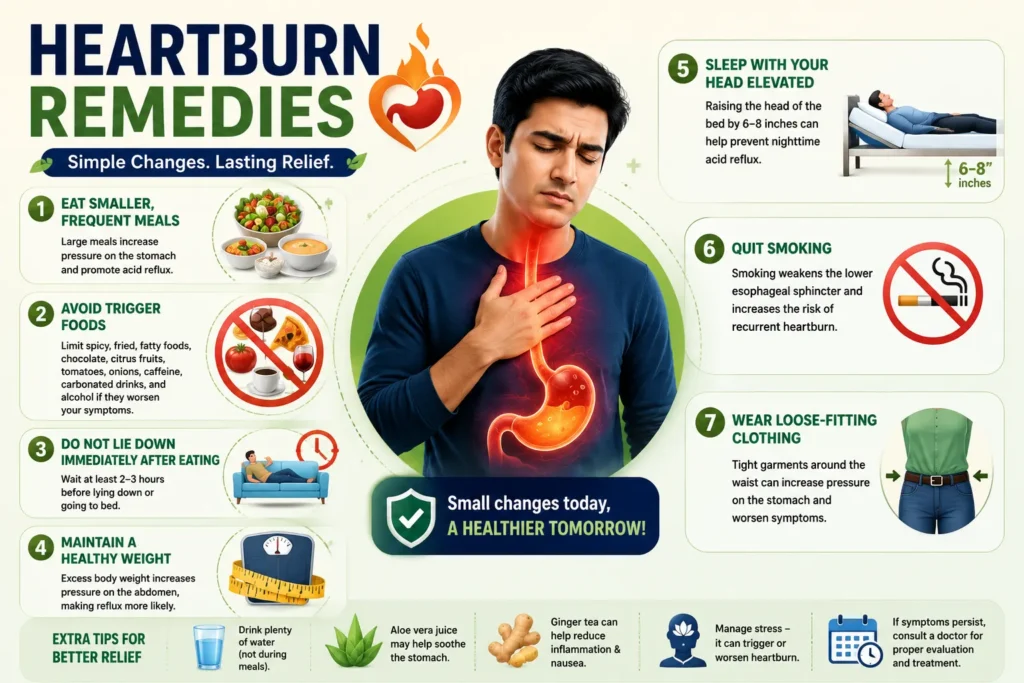
- Eat smaller, frequent meals: Large meals increase pressure on the stomach and promote acid reflux.
- Avoid trigger foods: Limit spicy foods, fried foods, fatty meals, chocolate, citrus fruits, tomatoes, onions, caffeine, carbonated drinks, and alcohol if they worsen your symptoms.
- Do not lie down immediately after eating: Wait at least 2–3 hours before lying down or going to bed.
- Maintain a healthy weight: Excess body weight increases pressure on the abdomen, making reflux more likely.
- Sleep with your head elevated: Raising the head of the bed by 6–8 inches can help prevent nighttime acid reflux.
- Quit smoking: Smoking weakens the lower esophageal sphincter and increases the risk of recurrent heartburn.
- Wear loose-fitting clothing: Tight garments around the waist can increase pressure on the stomach and worsen symptoms.
Heartburn Remedies
Several heartburn remedies may provide temporary relief for mild episodes, including:
- Drinking adequate water throughout the day
- Eating meals at regular times
- Avoiding overeating and late-night meals
- Identifying and avoiding personal food triggers
- Using over-the-counter antacids or acid-reducing medications only as directed by a cardiology specialist in Delhi
Cardiology Treatment in Delhi for Heartburn in Delhi
Persistent heartburn that occurs more than twice a week or does not improve with lifestyle changes may require medical treatment.
Diagnosis
Before recommending treatment, your doctor will review your medical history, assess your symptoms, and perform a physical examination. Depending on the severity and frequency of your symptoms, additional tests may include:
- Upper gastrointestinal (GI) endoscopy to examine the esophagus and stomach
- Esophageal pH monitoring to measure acid reflux
- Esophageal manometry to evaluate muscle function of the esophagus
- Imaging or other investigations if another condition is suspected
Heart Treatment in Delhi Options
The heart treatment depends on the severity of symptoms and the underlying diagnosis. Medical treatment may include:
- Antacids for quick, short-term symptom relief
- H2 receptor blockers to reduce stomach acid production
- Proton pump inhibitors (PPIs) for healing the esophagus and controlling frequent acid reflux
- Medications to improve stomach emptying in selected cases
- Heart Treatment of underlying conditions such as GERD or hiatal hernia
If medications and lifestyle modifications do not adequately control symptoms or complications develop, your doctor may recommend advanced procedures or anti-reflux surgery for long-term management.
Heartburn is a common symptom that often results from acid reflux, but persistent or recurrent episodes should never be ignored. While many cases improve with lifestyle changes and appropriate medication, frequent heartburn may indicate gastroesophageal reflux disease (GERD) or, in some cases, mimic symptoms of a heart attack. If you experience ongoing chest discomfort, difficulty swallowing, or symptoms accompanied by shortness of breath, sweating, or pain radiating to the arm or jaw, seek immediate medical attention for an accurate diagnosis.
If you are looking for comprehensive Heartburn Treatment in Delhi, the experienced medical team at Kalra Hospital provides thorough evaluation and personalized treatment for heartburn, acid reflux, and related conditions. When chest pain raises concerns about a possible heart condition, our specialists ensure prompt assessment to distinguish digestive disorders from cardiac emergencies and recommend the most appropriate treatment plan.
Schedule a consultation at Kalra Hospital today for expert diagnosis, advanced care, and effective management of persistent heartburn and chest discomfort.