
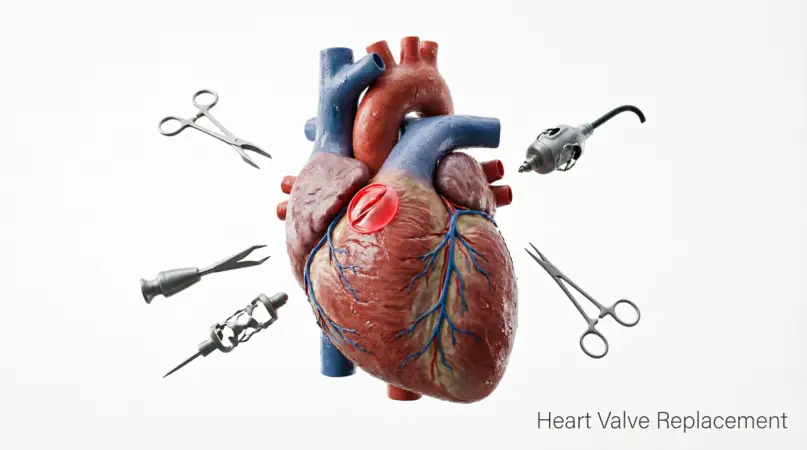
Not every diagnosis of valve disease leads to the operating table. Some valve conditions are watched for years without ever needing surgery; others need attention quickly. The difference comes down to which valve is affected, what has gone wrong with it, and how severely. This guide to heart valve surgery in Delhi walks through each major valve condition and what typically leads to a replacement recommendation.
What Heart Valve Replacement Means?
Heart valve replacement is a procedure in which a valve too damaged to repair, whether from narrowing, leaking, or both, is removed and replaced with an artificial one. The table below compares the two main valve types.
| Valve Type | Durability | Anticoagulation Needs |
| Mechanical | Lifelong durability | Lifelong blood thinners required |
| Biological | Roughly 10–20 years | No long-term anticoagulation needed |
Aortic Valve Conditions
Aortic Stenosis
Aortic stenosis is narrowing of the aortic valve, most commonly from age-related calcium buildup over decades. Replacement is generally recommended once stenosis is severe and the patient develops symptoms, breathlessness, chest discomfort, dizziness, or fainting during exertion, or shows declining heart pump function on imaging, even without symptoms. Guidelines base treatment decisions on these two factors rather than narrowing alone; a significantly calcified valve typically cannot be durably repaired, so replacement is standard.
Aortic Regurgitation
Here, the valve fails to close properly, letting blood leak backward with every beat. Chronic regurgitation can progress silently for years. Guidelines recommend replacement once regurgitation is severe and specific thresholds are crossed, including a decline in ejection fraction or enlargement of the heart’s main pumping chamber, sometimes before symptoms appear.
Mitral Valve Conditions
Mitral Regurgitation
When the mitral valve leaks, guidelines are clear: repair is preferred over replacement whenever a durable repair can be achieved, since preserving the patient’s own tissue produces better long-term outcomes. Replacement becomes necessary when anatomy or damage doesn’t allow reliable repair, generally for symptomatic patients with severe regurgitation, or asymptomatic patients once imaging shows pumping-chamber dysfunction.
Mitral Stenosis
Narrowing of the mitral valve, historically linked to rheumatic heart disease from untreated childhood strep infections, can sometimes be treated with a less invasive balloon procedure. Surgery becomes necessary when anatomy isn’t suitable for that approach, or the valve is too damaged for it to work.
Tricuspid and Pulmonary Valve Conditions
Disease affecting these valves is less common in isolation and often develops secondary to other heart conditions. When intervention is needed, it’s frequently performed alongside surgery on another valve, and the same principle applies: repair is favoured whenever achievable.
When Infection Changes the Picture
Infective endocarditis, a bacterial infection of the heart valves, can rapidly damage valve tissue regardless of which valve is affected. When infection has destroyed too much valve for repair, or is causing heart failure or persistent infection despite antibiotics, replacement is often needed urgently, unlike the gradual approach used for degenerative disease.
What About a Previously Replaced Valve?
Artificial valves don’t last forever, biological valves in particular. If a prosthetic valve develops significant narrowing, leakage, or structural failure over the years, patients may eventually need a repeat replacement, surgical or catheter-based depending on individual risk.
Why Some Patients Are Monitored for Years Before Surgery
Wait-and-monitor is often the right call, not a delay in care. Guidelines have lowered the intervention threshold as valve devices have become safer, but timing intervention around objective evidence of heart strain still beats acting too early or too late.
How the Decision Gets Made
Guidelines recommend that patients with severe valve disease be evaluated by a multidisciplinary heart team, cardiologists and surgeons together, weighing the valve, severity, symptoms, and surgical risk. This draws on echocardiography, stress testing when symptoms are unclear, and CT imaging for detailed planning in select cases.
“Heart valve disease often develops quietly, which is exactly why routine echocardiogram follow-up matters even when a patient feels completely well.”
Heart Valve Replacement Cost in Delhi
Heart valve replacement cost in Delhi for traditional surgical procedures typically ranges from approximately ₹2.5 lakh to ₹7 lakh, depending on the valve type chosen, hospital facility, ICU stay length, and case complexity. Mechanical valves sit toward the lower end of upfront cost but require lifelong anticoagulation, while biological valves cost more but avoid long-term blood thinners. A personalised quote from your surgical team remains the most accurate way to understand your costs.
When to See a Cardiologist in Delhi
Book an evaluation with a cardiologist in Delhi if you have a known heart murmur, experience breathlessness, fatigue, chest discomfort, or fainting during activity, or have previously been diagnosed with valve disease due for a follow-up echocardiogram. A history of childhood rheumatic fever is worth mentioning, since related mitral damage can take years to surface.
Conclusion
Whether heart valve replacement is genuinely required depends on which valve is affected, the type of dysfunction involved, and clear, evidence-based thresholds, not simply the presence of valve disease itself. Understanding these distinctions can make a diagnosis feel considerably less overwhelming. If you’ve been told you have valve disease, or are due for a cardiac evaluation, Kalra Hospitals in Delhi offers experienced cardiology and cardiac surgical care to guide you through exactly what your condition requires.
Kalra Hospitals has focused on cardiac care for more than 35 years across its Delhi locations in Kirti Nagar, Dwarka, and Najafgarh, with dedicated Cardiology and Cardiac Surgery departments backed by 300+ beds and 24×7 emergency services. With deep experience in complex structural heart conditions, reflected in its Barry J. Maron Hypertrophic Cardiomyopathy Centre, Kalra Hospitals is a trusted heart valve replacement hospital in Delhi.
Frequently Asked Questions
No. Many cases, particularly mild ones, are simply monitored over time and never progress to needing intervention.
Mitral repair, when durable and achievable, offers better long-term function and avoids an artificial valve, which is why guidelines consistently favour it whenever feasible.
Yes. Rheumatic mitral damage often progresses slowly and can require intervention decades after the original infection, which is why mentioning this history matters.