
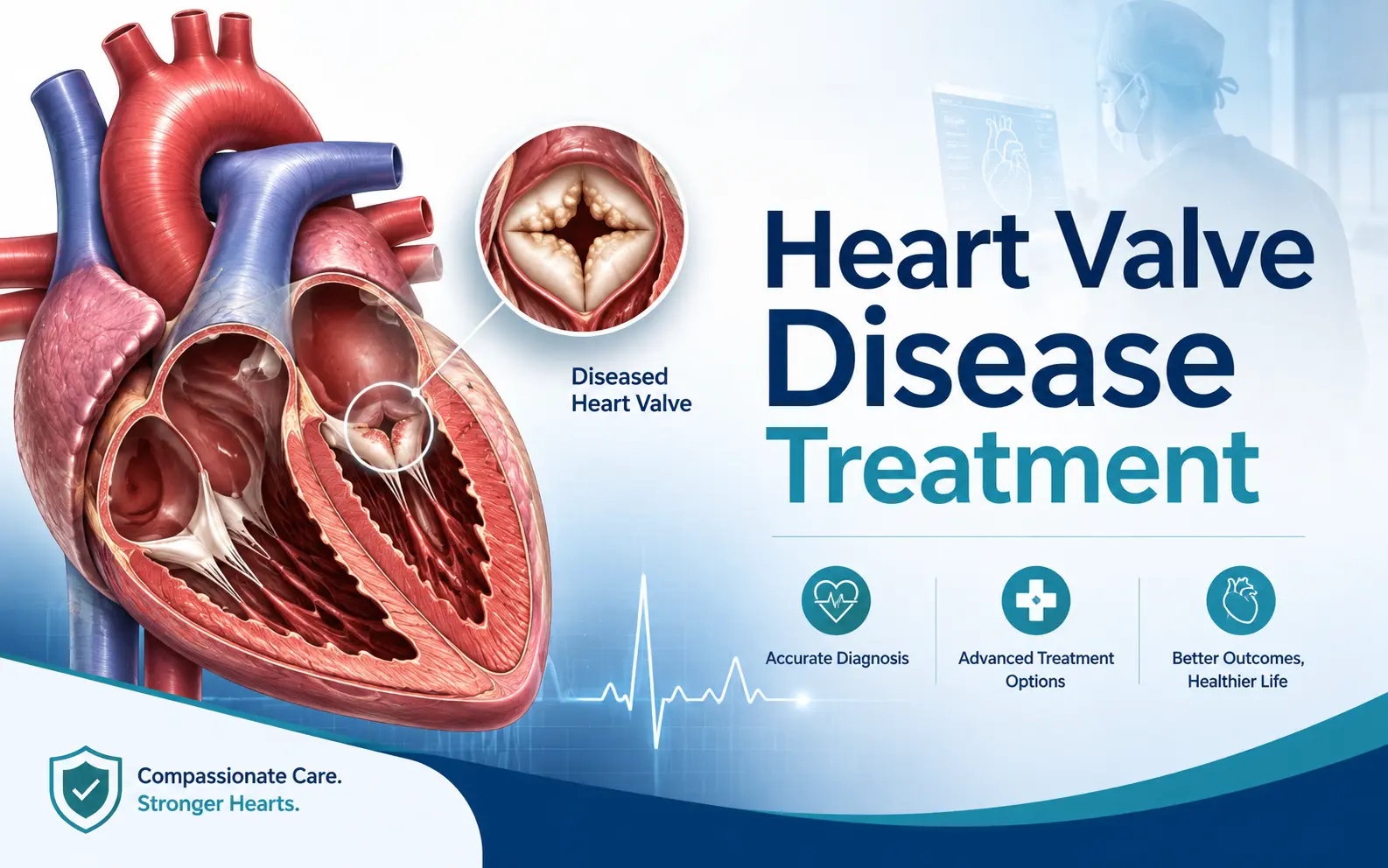
The heart relies on four valves working in precise coordination, opening and closing with every single beat to keep blood moving in one direction through its chambers. When even one of these valves fails to function correctly, the consequences build quietly, often for years, before becoming symptomatic. Heart valve disease is one of the more under-recognised cardiac conditions, frequently mistaken for general fatigue or “just getting older” until a routine examination reveals an abnormal heart sound. This article explains the different heart valve disease types, how each valve can be affected differently, and what heart valve disease treatment looks like at a cardiology hospital in Delhi today.
Understanding the Heart’s Four Valves
Each of the heart’s valves has a distinct role in directing blood flow, and disease can affect any of them individually or in combination.
- The aortic valve controls blood flow from the heart’s main pumping chamber into the aorta, the body’s largest artery. Disease here is the most common form of valvular heart disease overall.
- The mitral valve regulates blood flow between the heart’s upper and lower chambers on the left side. Historically, this valve has been closely associated with rheumatic heart disease.
- The tricuspid valve manages blood flow between the right atrium and right ventricle.
- The pulmonary valve controls blood flow from the heart into the pulmonary artery, which carries blood to the lungs.
What Are the Types of Heart Valve Disease?
Regardless of which valve is affected, valve disease generally falls into one of these categories:
- Stenosis occurs when a valve’s opening becomes narrowed or stiffened, restricting blood flow. The heart has to work harder to push blood through the constricted opening, gradually straining the heart muscle over time.
- Regurgitation, also called insufficiency or a “leaky valve,” happens when a valve doesn’t close completely, allowing blood to flow backward instead of moving forward as it should. This forces the heart to pump extra volume with each beat to compensate.
- Prolapse refers to a valve’s leaflets becoming floppy or bulging backward instead of closing evenly, which frequently leads to regurgitation. Mitral valve prolapse is a particularly common example, though most cases remain mild and never progress to significant leakage.
A single valve can develop both stenosis and regurgitation simultaneously, and more than one valve can be affected at the same time, a pattern doctors sometimes describe as mixed or multivalvular disease.
What Causes Heart Valve Disease?
The underlying causes vary by valve and by whether the condition is congenital or develops later in life.
- Age-related degeneration and calcification is the leading cause of aortic valve disease in adults, particularly aortic stenosis, where calcium deposits gradually stiffen the valve leaflets over decades.
- Rheumatic heart disease, a complication of untreated or inadequately treated streptococcal throat infections, remains a significant cause of valve disease, particularly affecting the mitral valve. According to global health data, rheumatic heart disease affects over 55 million people worldwide, the majority in low- and middle-income countries, underscoring why this cause still warrants specific attention in Indian cardiology practice, alongside the degenerative causes more commonly discussed in Western literature.
- Congenital abnormalities, such as a bicuspid aortic valve (having two leaflets instead of the usual three), are present from birth and can lead to valve problems appearing at almost any age.
- Infective endocarditis, an infection of the heart’s inner lining and valves, can cause acute, sometimes severe, valve damage.
- Other contributing factors include long-standing high blood pressure, connective tissue disorders like Marfan syndrome, and, less commonly, prior radiation therapy to the chest.
Recognising the Symptoms
Mild to moderate heart valve disease frequently causes no noticeable symptoms and may only be discovered when a doctor detects a heart murmur during a routine check-up. As the condition progresses, symptoms can include:
- Shortness of breath, particularly during physical activity or when lying flat
- Fatigue, even after light exertion
- Chest pain or a sensation of pressure
- Heart palpitations or an irregular heartbeat
- Swelling in the ankles, feet, or abdomen
- Dizziness or fainting, particularly with more advanced aortic valve disease
Because these symptoms overlap with several other conditions, and because early-stage valve disease is often entirely silent, regular cardiac evaluation matters more than waiting for symptoms to appear.
How Is Heart Valve Disease Diagnosed?
A cardiologist in Delhi typically begins with a physical examination, listening for an abnormal heart murmur, before confirming the diagnosis through further testing:
- Echocardiogram: The primary diagnostic tool, using ultrasound to visualise valve structure, movement, and blood flow patterns in real time
- ECG (electrocardiogram): Checks the heart’s electrical activity and can reveal related rhythm abnormalities
- Chest X-ray: Can show heart enlargement or fluid buildup associated with valve disease
- Cardiac catheterisation: Occasionally used to assess valve function and blood flow more precisely, particularly before surgery
Treatment of Heart Valve Disease
Treatment depends on which valve is affected, the type and severity of the disease, and the patient’s overall health.
- Watchful monitoring is appropriate for mild, asymptomatic valve disease, with regular echocardiograms to track any progression over time.
- Medication doesn’t repair or reverse valve damage directly, but it can manage related symptoms and complications, such as controlling blood pressure, managing irregular heart rhythms, or reducing fluid retention.
- Valve repair aims to preserve the patient’s own valve wherever possible, correcting structural issues like a prolapsed leaflet without full replacement. This is often the preferred approach for mitral valve disease when technically feasible.
- Valve replacement becomes necessary when repair isn’t a viable option, replacing the damaged valve with either a mechanical valve (durable but requiring lifelong blood-thinning medication) or a biological valve (derived from animal tissue, which doesn’t require long-term anticoagulation but may need eventual replacement).
- Minimally invasive and transcatheter procedures, including catheter-based valve repair and replacement techniques, have expanded treatment options considerably in recent years, offering shorter recovery times for appropriately selected patients compared to traditional open-heart surgery.
Conclusion
Heart valve disease often develops quietly, which is precisely why understanding its warning signs and getting a proper cardiac evaluation matters, particularly for anyone with a childhood history of rheumatic fever or a previously noted heart murmur. With accurate diagnosis and a treatment plan matched to the specific valve and severity involved, most patients achieve meaningfully better long-term outcomes. If you have concerns about your heart valve health, Kalra Hospitals in Delhi offers experienced cardiology and cardiac surgery care to guide you through diagnosis and treatment.
Frequently Asked Questions
No. Medication can manage symptoms and related complications, but it cannot repair or reverse structural valve damage. Definitive treatment for significant valve disease generally requires repair or replacement.
No. While age-related calcification is a common cause, particularly for the aortic valve, other causes include rheumatic heart disease, congenital valve abnormalities, and infections such as endocarditis, which can affect younger patients as well.
This depends on the severity and type of valve involvement, but most cardiologists recommend periodic echocardiograms, often annually for stable, mild cases, to track any changes in valve function over time.
No. Many cases of valve disease are mild and managed with monitoring or medication for years before, if ever, requiring surgical intervention. The decision depends on the specific valve, disease severity, and symptoms.