
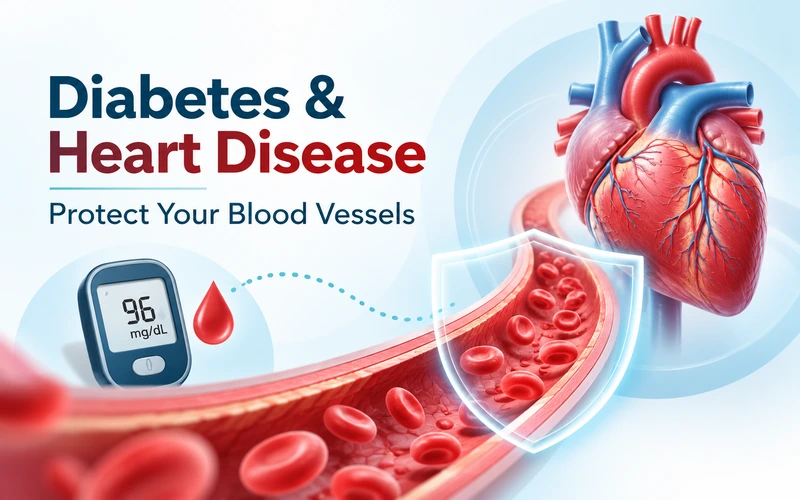
Years of high blood sugar damage the lining of your blood vessels and the nerves that control your heart, which is why adults with diabetes are nearly twice as likely to have heart disease or a stroke as people without it. The good news is that this risk can be lowered. Keeping blood sugar, blood pressure and cholesterol in their target ranges, staying active, not smoking and getting regular heart checks all protect your arteries.
If you live with diabetes, the number on your glucose meter is also a number about your heart. The two conditions travel together, and people with diabetes tend to develop heart disease at a younger age. Here is how the damage happens, what to aim for, and when to see a cardiology hospital in Delhi.
How High Blood Sugar Harms Your Blood Vessels
- Sugar irritates the vessel wall. Constantly high glucose damages the inner lining of arteries.
- Fatty deposits settle in. Cholesterol sticks to the damaged areas and forms plaque, narrowing the artery.
- Arteries stiffen. Stiff vessels push blood pressure up and make the heart work harder.
- Nerves are affected. Damage to nerves that regulate the heart and vessels can change heart rate and blunt pain signals.
- Narrowed or blocked arteries follow. Over time this can lead to angina, a heart attack, heart failure or a stroke.
The Risk Factors That Add Up
Diabetes rarely acts alone. These factors add up alongside it:
| Risk factor | Why it matters |
| High blood pressure | More common with diabetes and strains the heart and arteries |
| Abnormal cholesterol | High LDL, low HDL or high triglycerides speed up plaque build-up |
| Smoking | Narrows blood vessels further |
| Belly fat | Waist above 40 inches (men) or 35 inches (women) |
| Chronic kidney disease | Affects about 40% of people with diabetes and adds to heart risk |
| Family history | A close relative with a heart attack before 50 doubles the risk |
| Inactivity | Worsens blood sugar, weight and blood pressure together |
Most of these can be changed. Quitting smoking, losing weight and walking daily each improve several risks at once, so small steps go a long way, and you do not need to fix everything in a month.
The Targets Worth Knowing: Your ABCs
| Letter | What it measures | Typical target for most adults with diabetes |
| A | A1C (average blood sugar over about 3 months) | Below 7%, though some people need a different goal |
| B | Blood pressure | Below 140/90 mm Hg for most |
| C | Cholesterol | Individual target; many people over 40 are advised a statin |
| S | Smoking | Stop completely |
These figures come from the US National Institute of Diabetes and Digestive and Kidney Diseases. Your own targets depend on your age, other conditions and medicines, so confirm them with your doctor.
Warning Signs You Should Never Ignore
| Heart attack | Stroke |
| Chest pain or pressure lasting more than a few minutes | Sudden weakness or numbness on one side of the face, arm or leg |
| Pain spreading to arm, shoulder, back, neck or jaw | Sudden confusion or trouble speaking |
| Breathlessness, sweating, light-headedness | Loss of balance or trouble walking |
| Nausea, indigestion, unusual tiredness | Trouble seeing in one or both eyes |
| Sudden, severe headache |
One point is specific to diabetes: nerve damage can dull chest pain, so a heart attack may feel like tiredness, breathlessness or indigestion. Do not wait for the classic crushing pain, and do not drive yourself if symptoms are severe. Go to an emergency department straight away if you notice these signs.
Daily Habits That Protect Your Heart
- Move for at least 150 minutes a week of moderate activity such as brisk walking, plus muscle-strengthening on two days
- Build meals around vegetables, pulses, whole grains and lean protein, and go easy on refined flour, sugary drinks and fried snacks
- Lose weight if you carry extra, since even modest loss improves insulin response and blood pressure
- Stop smoking and avoid e-cigarettes
- Sleep properly and manage stress, for example with walking, yoga or deep breathing
- Take medicines as prescribed, including statins or blood pressure tablets, and never stop one without asking
- Check your blood sugar and blood pressure at home and note the readings for your doctor
Check-ups Worth Scheduling
| Test | What it tells you |
| HbA1c | Your three-month sugar average |
| Blood pressure | Whether your arteries are under strain |
| Lipid profile | LDL, HDL and triglycerides |
| Kidney function (creatinine, urine albumin) | Early kidney damage, which also raises heart risk |
| ECG | Rhythm and signs of past heart damage |
| Echocardiogram or stress test | Heart pumping and blood flow when your doctor advises it |
How Heart Disease Is Treated When You Have Diabetes
| Approach | What it involves |
| Lifestyle changes | Food, activity, weight and quitting tobacco, which underpin every other treatment |
| Medicines | Statins, blood pressure tablets, and certain diabetes medicines shown to lower heart attack risk; ask whether daily aspirin suits you |
| Angioplasty and stenting | A narrowed artery is opened through a small puncture and held open with a stent |
| Bypass surgery | A new route for blood is created around blocked arteries, usually for multiple or complex blockages |
| Regular follow-up | Adjusting medicines as your sugar, pressure and kidney tests change |
When to See a Cardiologist
Do not wait for a crisis. Book a consultation with a cardiologist in Delhi if you have:
- Chest discomfort on walking or climbing stairs
- Breathlessness that is new or getting worse
- Swollen ankles or unexplained tiredness
- Diabetes for 10 years or more, or diabetes alongside high blood pressure or cholesterol
- A family history of early heart disease
Heart and Diabetes Care in Delhi
If you are looking for heart disease treatment in Delhi, Kalra Hospitals has cardiology, interventional cardiology and cardiac surgery departments, along with ICU and 24×7 emergency services. A cardiology hospital in Delhi that can handle a routine heart check-up and a complex emergency under one roof is useful for people with diabetes, whose heart problems can appear without warning.
Many patients also ask about a diabetes doctor in Delhi. Diabetes treatment in Delhi goes more smoothly when your physician and your heart specialist share the same reports, so bring your HbA1c, cholesterol and ECG results to each visit. Call to ask about appointments and the right department for your situation.