







Cardiovascular diseases cause 20.5 million deaths globally each year, making them the leading cause of death worldwide, according to the World Heart Organization.
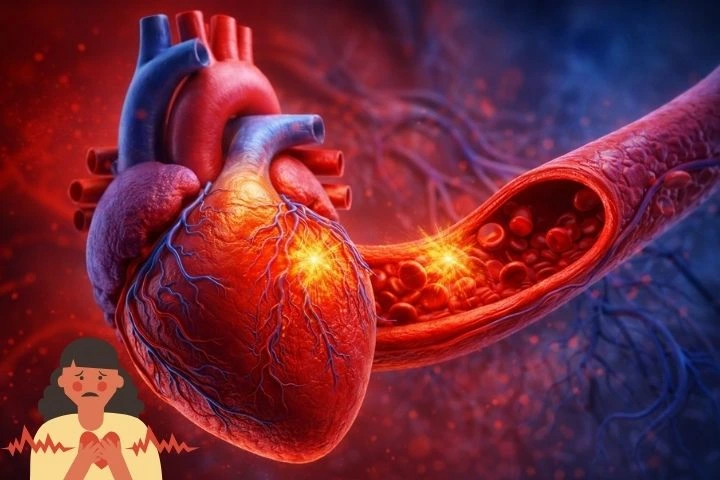
Myocardial infarction, commonly known as a heart attack, occurs when blood flow to a part of the heart muscle is suddenly blocked. The Fourth Universal Definition of Myocardial Infarction defines it as a rise and/or fall of cardiac troponin with at least one value above the 99th percentile upper reference limit, along with clinical evidence of myocardial ischemia.
In simple terms, myocardial infarction means death of heart muscle tissue due to loss of oxygen supply. Immediate diagnosis and treatment at a specialised cardiology hospital in Delhi are critical to restore blood flow and limit permanent heart damage.
Myocardial Infarction Definition
The Fourth Universal Definition of Myocardial Infarction requires a rise and/or fall of cardiac troponin with at least one value above the 99th percentile upper reference limit, along with evidence of myocardial ischemia.
Myocardial infarction is defined as irreversible injury to heart muscle cells due to prolonged interruption of blood supply. Ischemia occurs when a coronary artery becomes blocked, preventing oxygen from reaching heart tissue. If blood flow is not restored promptly, the affected myocardium undergoes necrosis.
Clinical evidence of myocardial ischemia may include chest pain, ECG changes, imaging evidence of new heart muscle damage, or identification of a coronary artery blockage during angiography.
At a good heart hospital in Delhi, diagnosis depends on a combination of symptoms, ECG findings, and cardiac biomarker testing to confirm myocardial infarction accurately.
What is Myocardial Infarction Meaning
Cardiovascular diseases account for 20.5 million deaths annually worldwide, and myocardial infarction remains one of the most critical cardiac emergencies.
The term myocardial infarction comes from two words:
- “Myocardial” refers to the heart muscle.\
- “Infarction” means tissue death due to lack of blood supply.
Myocardial infarction heart damage occurs when a coronary artery becomes blocked, usually due to a clot forming over a ruptured atherosclerotic plaque. Without oxygen-rich blood, heart muscle cells begin to die within minutes.
In Delhi heart hospitals, cardiology doctors treat myocardial infarction as a time-sensitive emergency. Early restoration of blood flow reduces the size of the damaged heart muscle and lowers the risk of long-term complications.
Myocardial Infarction Types Seen in Delhi Hospitals
The European Society of Cardiology classifies myocardial infarction into ST-segment elevation myocardial infarction (STEMI) and non–ST-segment elevation myocardial infarction (NSTEMI) based on ECG findings.
1) STEMI
STEMI occurs when a coronary artery is completely blocked. The ECG shows persistent ST-segment elevation. This type requires immediate reperfusion therapy, usually primary percutaneous coronary intervention (PCI). ESC guidelines recommend treatment within 12 hours of symptom onset whenever possible.
2) NSTEMI
NSTEMI occurs when a coronary artery is partially blocked. The ECG may show ST depression or T-wave inversion instead of ST elevation. Troponin levels rise above the 99th percentile upper reference limit, confirming myocardial injury.
3) Type 1 Myocardial Infarction
StatPearls explains that Type 1 MI results from acute plaque rupture with superimposed thrombosis, leading to coronary artery occlusion.
4) Type 2 Myocardial Infarction
Type 2 MI occurs due to an imbalance between oxygen supply and demand. Conditions such as severe anemia, arrhythmias, or hypotension can trigger this type without plaque rupture.
Myocardial Infarction ECG Changes in Delhi Emergency Care
ECG plays a central role in diagnosing myocardial infarction within minutes of hospital arrival. In Delhi emergency departments, a 12-lead ECG is performed immediately when heart attack symptoms are suspected.
ST-Segment Elevation (STEMI)
ST-segment elevation indicates complete coronary artery occlusion. This pattern requires urgent reperfusion therapy. ESC guidelines recommend primary PCI within 12 hours of symptom onset when feasible.
ST-Segment Depression or T-Wave Inversion (NSTEMI)
NSTEMI may show ST depression or T-wave inversion instead of ST elevation. Troponin testing confirms myocardial injury when levels exceed the diagnostic threshold.
Pathological Q Waves
Q waves may appear hours to days after infarction and indicate established myocardial necrosis.
In Delhi hospitals, ECG findings combined with troponin levels determine whether the patient requires emergency catheterization, medical stabilization, or further cardiac imaging.
Myocardial Infarction Symptoms
The American Heart Association states that chest discomfort lasting more than a few minutes or recurring is a classic symptom of myocardial infarction.
The most common symptoms of myocardial infarction include:
- Chest pain or pressure, often described as squeezing or heaviness
- Pain radiating to the left arm, neck, jaw, or back
- Shortness of breath
- Cold sweating
- Nausea or vomiting
- Sudden dizziness or lightheadedness
Chest discomfort may persist continuously or come and go. Some patients describe it as tightness rather than sharp pain.
Silent myocardial infarction can occur, especially in people with diabetes. These patients may experience minimal or atypical symptoms while heart muscle damage continues.
Myocardial Infarction Women Symptoms
The American Heart Association notes that women experience symptoms different from classic chest pain, including nausea and shortness of breath.
While chest discomfort lasting more than a few minutes remains common, women are more likely to report:
- Unusual fatigue lasting several hours or days
- Shortness of breath without severe chest pain
- Nausea or vomiting
- Back, neck, or jaw pain
- Lightheadedness or fainting
These atypical presentations often delay hospital arrival. Some women may not describe crushing chest pain but instead report pressure, tightness, or indigestion-like discomfort.
Causes of Myocardial Infarction in Delhi
StatPearls explains that myocardial infarction most commonly results from acute plaque rupture with superimposed thrombosis, leading to coronary artery occlusion.
The primary cause of myocardial infarction is atherosclerosis, a condition in which fatty plaques build up inside coronary arteries. When a plaque ruptures, a blood clot forms rapidly. This clot can partially or completely block blood flow to the heart muscle.
Major risk factors include:
- Smoking, which damages blood vessel lining
- Diabetes mellitus, which accelerates atherosclerosis
- Hypertension, which increases arterial stress
- High cholesterol levels
- Obesity and sedentary lifestyle
- Family history of premature coronary artery disease
Myocardial Infarction Treatment in Delhi Hospitals
The European Society of Cardiology recommends immediate reperfusion therapy for STEMI within 12 hours of symptom onset whenever feasible.
Treatment of myocardial infarction focuses on restoring blood flow to the blocked coronary artery and preventing further heart muscle damage.
1) Primary Percutaneous Coronary Intervention (PCI)
Primary PCI, commonly known as emergency angioplasty, is the preferred treatment for STEMI. A catheter is inserted through a blood vessel to open the blocked artery using a balloon and stent. Rapid PCI reduces infarct size and improves survival.
2) Thrombolytic Therapy
If PCI is not immediately available, clot-dissolving medications may be administered to restore blood flow. This option is time-sensitive and most effective when given early after symptom onset.
3) Antiplatelet and Anticoagulant Medications
Patients receive aspirin and additional antiplatelet drugs to prevent clot progression. Anticoagulants reduce further thrombus formation during acute management.
4) Coronary Artery Bypass Grafting (CABG)
In cases of complex multivessel coronary artery disease, cardiac surgeons may recommend CABG to bypass blocked arteries.
5) Intensive Care Monitoring
After initial treatment, patients require cardiac monitoring to detect arrhythmias, heart failure, or recurrent ischemia.
Cardiovascular diseases cause 20.5 million deaths each year worldwide, and myocardial infarction remains one of the most life-threatening cardiac emergencies.
Myocardial infarction occurs when a coronary artery becomes blocked, cutting off oxygen supply to the heart muscle. Diagnosis requires cardiac troponin elevation above the 99th percentile upper reference limit along with evidence of ischemia.
Early recognition of symptoms such as chest pain lasting more than a few minutes, breathlessness, or atypical symptoms in women is critical. Immediate ECG and reperfusion therapy within 12 hours of symptom onset significantly improve survival in STEMI patients. Prompt heart and cardiac treatment in Delhi at a well-equipped cardiology hospital in Delhi reduces heart muscle damage, prevents complications, and improves long-term outcomes.
Kalra Hospital, Delhi offers rapid ECG evaluation, cardiac biomarker testing, and 24/7 access to advanced cardiac care. Our cardiology and cardiac surgery team provides emergency PCI, intensive monitoring, and comprehensive heart attack management.
Kalra Hospitals
+(91)-11-45005600, +(91)-11-45005700
Dwarka | Kirti Nagar | Najafgarh