
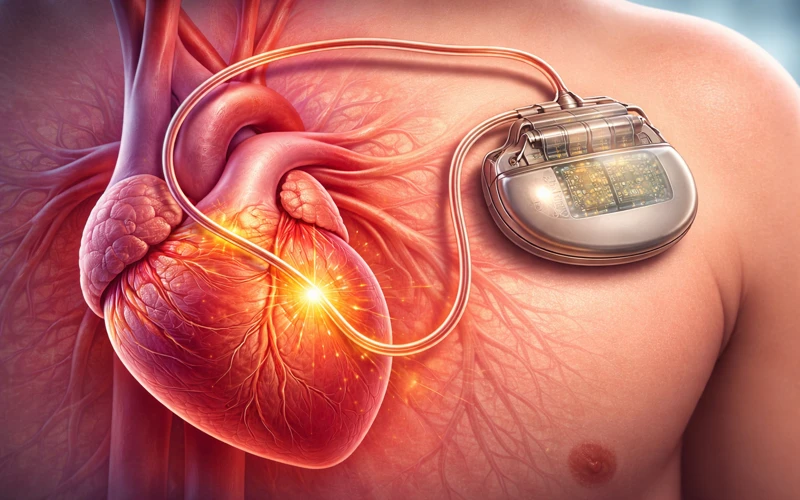
More than 600,000 pacemakers are implanted worldwide each year to treat abnormal heart rhythms and slow heartbeats (Medtronic). A pacemaker is a small medical device placed under the skin that helps regulate the heart’s electrical activity and maintain a stable heartbeat.
The heart normally controls its rhythm through a specialized structure called the sinoatrial (SA) node, which acts as the natural pacemaker of the heart and generates 60–100 electrical impulses per minute. These electrical signals coordinate heart contractions and ensure proper blood circulation throughout the body.
However, certain heart conditions can disrupt this electrical system. Problems such as bradycardia (slow heart rate), heart block, or other cardiac arrhythmias cause symptoms like dizziness, fatigue, fainting, or shortness of breath. In such situations, doctors may recommend implanting an artificial pacemaker to help restore a normal heart rhythm.
Understanding when a pacemaker is required, why pacemakers are used, and how pacemaker operation works helps patients experiencing heart rhythm problems. Cardiology specialists at heart hospitals in Delhi evaluate heart rhythm disorders through diagnostic tests and recommend pacemaker therapy when necessary to support healthy heart function.
What a Pacemaker Means for Heart Patients?
A pacemaker is a small electronic device that helps regulate abnormal heart rhythms by sending electrical impulses to the heart muscles. The device is implanted under the skin near the chest and connected to the heart through thin wires called leads.
The main function of a pacemaker is to maintain a stable and adequate heart rate when the heart’s natural electrical system fails to function properly. Normally, the heart beats in a coordinated rhythm to pump blood efficiently throughout the body. When this rhythm becomes too slow or irregular, a pacemaker helps restore proper timing of heartbeats.
Pacemakers are commonly used to treat conditions such as bradycardia, heart block, and certain types of arrhythmias. These conditions can cause symptoms like dizziness, fatigue, fainting, and reduced exercise capacity. The device continuously monitors the heart’s electrical activity. When it detects that the heartbeat has slowed down or paused, it delivers a small electrical signal to stimulate the heart muscle and trigger a normal heartbeat
The Natural Pacemaker of the Heart
The natural pacemaker of the heart is called the sinoatrial (SA) node, which generates electrical impulses that control the heartbeat. This small group of specialized cells is located in the upper chamber of the right atrium.
The SA node produces 60–100 electrical signals per minute, which determine the normal resting heart rate in healthy adults as per research and studies. Each electrical impulse travels through the heart’s conduction system, causing the heart muscles to contract in a coordinated manner and pump blood efficiently.
After the SA node generates an impulse, the electrical signal travels through the atrioventricular (AV) node, which acts as a relay station. From there, the signal spreads through specialized pathways in the ventricles, allowing the lower chambers of the heart to contract and push blood to the lungs and the rest of the body.
When a Pacemaker Is Required for Heart Conditions?
Pacemaker therapy is commonly recommended when the heart rate becomes too slow, irregular, or unable to maintain adequate blood circulation (Mayo Clinic). These conditions occur when the heart’s electrical system fails to transmit signals properly.
Bradycardia (Slow Heart Rate)
Bradycardia is generally defined as a resting heart rate below 60 beats per minute, which may cause symptoms such as dizziness, fatigue, or fainting. When the heart beats too slowly, it may not pump enough blood to meet the body’s needs. In such cases, doctors may recommend a pacemaker to help maintain a stable heart rhythm.
Heart Block
Heart block occurs when electrical signals from the upper chambers of the heart fail to reach the lower chambers properly. This condition disrupts the coordination of heart contractions and may result in a slow or irregular heartbeat. Pacemakers are commonly used to restore proper electrical communication between the heart chambers.
Sick Sinus Syndrome
Sick sinus syndrome occurs when the SA node (natural pacemaker of the heart) does not generate electrical impulses correctly. This condition may cause alternating episodes of slow heart rate and irregular rhythm. A pacemaker helps stabilize the heartbeat by providing consistent electrical stimulation.
Heart Failure With Electrical Dyssynchrony
In certain patients with heart failure, the ventricles of the heart may not contract in a coordinated manner. In these cases, a specialized pacemaker called cardiac resynchronization therapy (CRT) may be used to improve the coordination of heart contractions and support more effective blood pumping.
Cardiology Symptoms That Indicate Pacemaker Need
Bradycardia and other heart rhythm disorders can cause symptoms when the heart cannot pump enough blood to the brain and other organs. These symptoms often indicate that the heart’s electrical system may not be functioning properly.
- Persistent Dizziness or Lightheadedness
- Fainting or Near-Fainting Episodes
- Extreme Fatigue
- Shortness of Breath
- Chest Discomfort or Palpitations
Do you have any of these symptoms? Consult a cardiologist to eliminate heart risks
Why Doctors Use Pacemakers in Cardiology Treatment in Delhi
Pacemakers are used in cardiology to regulate abnormal heart rhythms and ensure the heart maintains an adequate rate to pump blood effectively. When the heart’s electrical system fails to generate or transmit signals properly, pacemaker therapy helps restore a stable heartbeat.
Maintaining a Stable Heart Rhythm
A pacemaker continuously monitors the heart’s electrical activity. If the device detects that the heartbeat has slowed down or stopped temporarily, it delivers a small electrical impulse to stimulate the heart muscle. This helps maintain a consistent and reliable heart rhythm.
Preventing Symptoms of Slow Heart Rate
Patients with slow heart rhythms often experience fatigue, dizziness, fainting, or reduced exercise tolerance. Pacemaker therapy helps prevent these symptoms by ensuring that the heart maintains a minimum safe heart rate.
Supporting Heart Function in Certain Cardiac Conditions
Pacemakers are commonly used in the treatment of several heart conditions, including:
- Bradycardia (slow heart rate)
- Heart block
- Sick sinus syndrome
- Certain types of arrhythmias
In some patients with heart failure, specialized pacemakers may also help coordinate the contractions of the heart’s ventricles, improving overall cardiac efficiency.
Heart Pacemaker Operation Procedure in Delhi
By restoring a stable heart rhythm, pacemakers can help patients return to normal daily activities with reduced symptoms and improved physical endurance.
Pacemaker implantation is a minimally invasive cardiac procedure in Delhi that typically takes about 1–2 hours to complete. The procedure involves placing a small electronic device under the skin of the chest to help regulate the heart’s electrical activity.
Pre-Procedure Evaluation
Before pacemaker implantation, cardiologists perform several diagnostic tests to confirm the need for the device. These tests may include:
- Electrocardiogram (ECG) to measure heart rhythm
- Holter monitoring to record heart activity over 24–48 hours
- Echocardiography to assess heart structure and pumping function
- Electrophysiology studies to evaluate electrical conduction pathways
Pacemaker Implantation Procedure
During the pacemaker operation, the patient is usually given local anesthesia with mild sedation. The surgeon makes a small incision near the upper chest below the collarbone.
Thin insulated wires called leads are inserted through a nearby vein and guided into the heart using imaging guidance such as fluoroscopy. These leads are positioned in the appropriate heart chambers to deliver electrical impulses.
The pacemaker generator, which contains the battery and electronic circuitry, is then placed under the skin in a small pocket created during the procedure. The leads are connected to this generator, allowing the device to monitor and regulate heart rhythm.
Device Testing and Closure
Once the pacemaker is implanted, the cardiologist tests the device to ensure that it properly senses heart activity and delivers electrical stimulation when needed. After confirming correct function, the incision is closed with stitches.
Modern pacemaker devices are designed to continuously monitor heart rhythm and deliver electrical impulses when the heartbeat becomes too slow or irregular, helping restore normal cardiac function. Early diagnosis through cardiac tests such as ECG, Holter monitoring, and echocardiography allows cardiologists to determine whether pacemaker implantation is necessary to support healthy heart activity.
Kalra Hospitals in Delhi provides advanced cardiac care and diagnostic services for patients with heart rhythm disorders. The cardiology team evaluates heart conditions through comprehensive cardiac testing and clinical assessment to determine whether pacemaker therapy is required.
Patients seeking cardiac surgery hospital in Delhi can consult the cardiology team at Kalra Hospitals for expert guidance, pacemaker treatment, and personalized cardiac care.